A business owner in Abuja set up a store, opened a business bank account, and assumed that was all they needed to start accepting online payments. Three months later, they were still manually verifying transfers and chasing customers for receipts.
The problem was not the bank. The bank was doing exactly what banks do. The missing piece was a payment gateway.
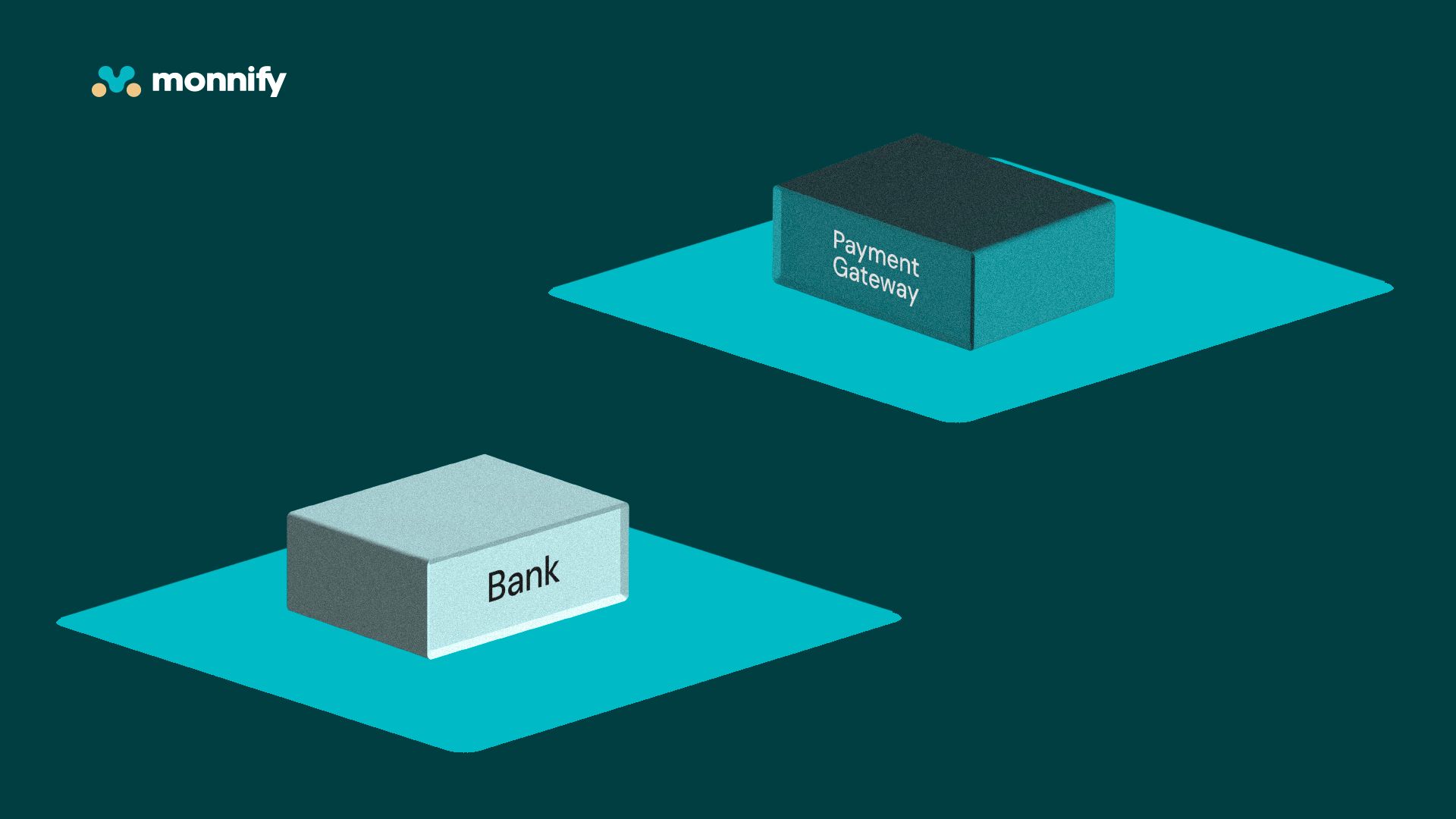
Banks and payment gateways serve different roles in the payment ecosystem. Understanding the difference saves time, money, and a lot of operational frustration.
What a Bank Does
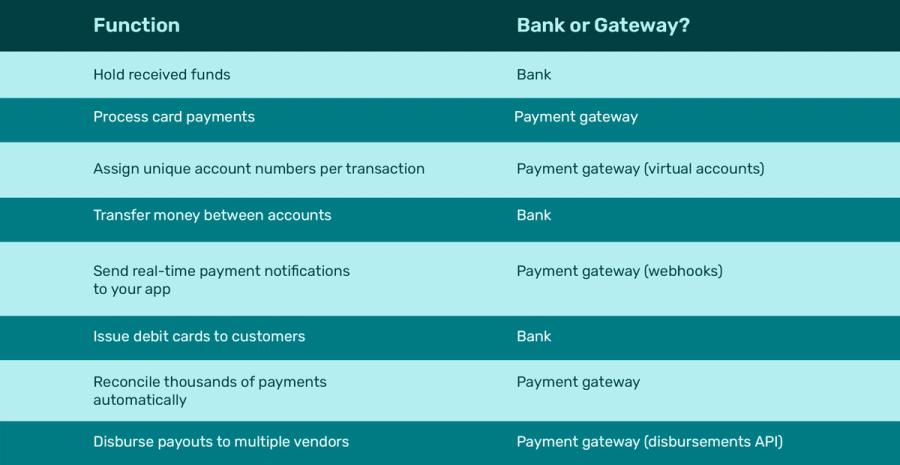
A bank is a licensed financial institution. Its primary jobs are:
- Holding deposits in current or savings accounts
- Facilitating fund transfers between accounts
- Issuing cards (debit, credit)
- Providing credit and lending products
- Offering financial services under CBN regulation
When a customer pays you via bank transfer today, the bank processes the transfer from their account to yours. That is the bank doing its job. But the bank does not know this payment is for Invoice #245 or Order #7892. It has no way to tell your system that the payment has arrived. It does not trigger your fulfilment workflow or send the customer a confirmation.
That is not a flaw. It is just not what banks are built for.
What a Payment Gateway Does
A payment gateway is a technology layer that sits between your customers and the banking system. It is not a financial institution. It does not hold your money permanently.
What it does is:
- Accept payment instructions from your checkout
- Encrypt and route payment data to the right bank or card network
- Receive confirmation of payment from the bank
- Notify your system in real time via webhooks
- Provide transaction records, references, and reconciliation data
The gateway turns a bank transfer into a structured, traceable business transaction. It is the connective tissue between 'customer clicks pay' and 'business knows it got paid.'
Why Your Business Needs Both
You cannot receive money without a bank. You cannot run a modern online business without a payment gateway. These are not competing options. They work together.
The Virtual Account: Where Bank and Gateway Meet
Virtual accounts are one of the most elegant examples of how a payment gateway extends a bank's functionality without replacing it.
Monnify, for example, can generate a unique bank account number for each transaction or customer. This account number is a real bank account, operated through a partner bank, but managed entirely by Monnify's infrastructure.
When the customer transfers to that account number, the bank processes the transfer normally. But Monnify's system detects the inbound payment, matches it to the correct order, and sends your backend a webhook in real time.
The bank moves the money. The gateway makes the money meaningful to your system.
A Common Misconception: 'Can't I Just Use My Bank Account for Online Payments?'
Technically, yes. Customers can transfer to your bank account manually. Practically, this creates serious problems at any meaningful scale:
- You have no automated way to match incoming transfers to specific orders.
- A customer with a common name like 'John Doe' might share that name with three other customers who paid the same day.
- Your team has to manually check bank statements and update order statuses.
- Customers get delayed confirmations, which drives anxiety and refund requests.
At 10 orders a day, this is manageable. At 100 or 1,000, it breaks. A payment gateway solves this from day one.
Automate your payment reconciliation
Monnify's virtual account feature assigns unique account numbers per customer or transaction. Every inbound transfer matches automatically, and your system gets notified instantly.
Get started at monnify.com
FAQ
Can a payment gateway replace a bank account?
No. You still need a bank account to receive your settled funds. The gateway processes and routes payments. Settlement lands in your registered bank account.
Do I need a merchant bank account separately?
In Nigeria, most payment gateways settle directly to your business current account. You do not typically need a separate 'merchant account' in the traditional sense. Confirm this with your chosen provider during onboarding.
What if my bank already has an online payment product?
Some Nigerian banks offer basic payment collection tools. These are typically limited in features and lack the developer-grade APIs, virtual account infrastructure, and webhook systems that a dedicated payment gateway provides. For serious product integrations, a standalone gateway almost always offers more.
Related: What is a Payment Gateway and How to Choose One | Payment Processor vs Payment Gateway