
A startup founder once asked: 'Do we just copy a Paystack link and paste it into our site?' The answer depends on the type of payment gateway, and that type determines how much control, complexity, and cost are involved in the setup.
Understanding the different types of payment gateways helps you make smarter integration decisions. Not every business needs a full API integration. Not every business can afford to use a simple payment link.
The Four Main Types of Payment Gateways
1. Hosted Payment Gateways
A hosted gateway redirects your customer to the payment provider's own checkout page to complete the transaction. After payment, they are brought back to your site.
Advantages:
- Easiest integration. Often as simple as adding a button or link.
- Lower PCI-DSS compliance requirements since card data never touches your servers.
- The gateway provider handles security, uptime, and UI updates.
Disadvantages:
- You lose control of the checkout experience.
- Redirect can interrupt the buying flow and increase drop-off.
- Harder to match your brand.
Best for: Small businesses, content creators, and anyone who wants fast setup with minimal technical investment. Payment links, which Monnify offers as a standalone product, fall broadly in this category.
2. API-Based (Integrated) Payment Gateways
With an API integration, payment happens directly on your platform. The customer never leaves your site or app. Your frontend captures payment details and your backend calls the gateway's API to process the transaction.
Advantages:
- Full control over the user experience.
- Seamless checkout, no redirects.
- Flexible: you can add custom logic, validation, and UI flows.
Disadvantages:
- More complex to build and maintain.
- Your team handles more of the security surface.
- Requires proper sandbox testing before going live.
Best for: Product teams building custom checkout experiences, mobile apps, and platforms where user experience is a competitive differentiator.
Monnify's API supports this model fully. Developers can initialise transactions, handle webhook callbacks, verify payments, and process disbursements all through a single, well-documented REST interface.
3. Self-Hosted Payment Gateways
In a self-hosted model, your servers collect the payment data and pass it directly to the payment processor. The gateway infrastructure runs on your own systems.
Advantages:
- Maximum customisation.
- Complete ownership of the payment experience and data.
Disadvantages:
- You carry the full PCI-DSS compliance burden.
- Requires significant security investment.
- Higher engineering overhead to build and maintain.
Best for: Large enterprises with dedicated security teams and very specific regulatory or customisation requirements. Rare in the Nigerian market.
4. Bank Transfer Gateways (Virtual Accounts)
This type is particularly relevant in Nigeria. Instead of a card form, the customer receives a bank account number and makes a transfer. The gateway detects the inbound payment, matches it to the transaction, and confirms the order.
Advantages:
- No card required, which matters in a market where card penetration is still growing.
- Works for high-ticket purchases where customers prefer bank transfers.
- Reduces card fraud exposure.
- Automatic reconciliation when virtual accounts are used correctly.
- Payment confirmation takes slightly longer than instant card processing.
- Customers must leave your checkout environment briefly to make the transfer.
Monnify's virtual account infrastructure is built specifically for this use case. Each transaction or customer gets a dedicated account number. Payments match automatically and webhooks fire the moment a transfer is confirmed.
This is why many Nigerian ecommerce platforms, subscription services, and B2B platforms default to virtual account collections alongside card options.
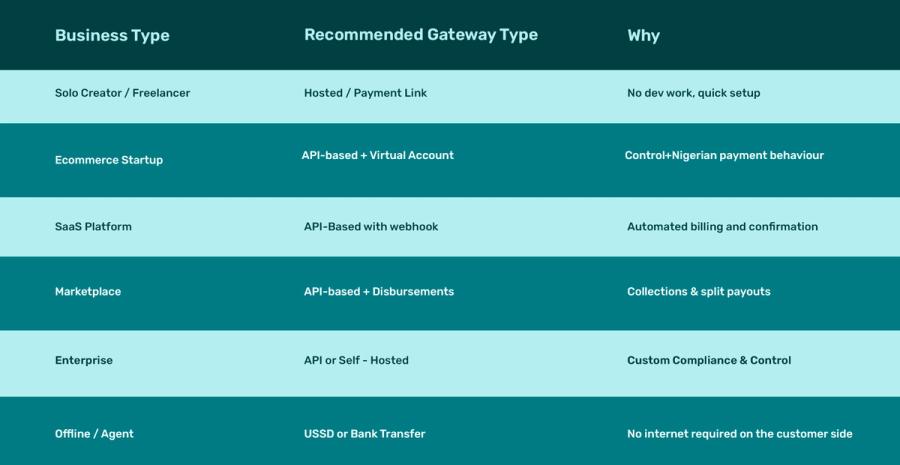
Choosing the Right Type for Your Business
How Gateway Types Affect Conversion
There is a direct relationship between checkout friction and conversion rate. Hosted gateways introduce a redirect. That extra step adds friction. API-based integrations remove that redirect entirely.
Research from Baymard Institute shows that complicated or unfamiliar checkout processes cause up to 26% of cart abandonment globally. In Nigeria, the equivalent friction often comes from unsupported payment methods, not design.
The businesses with the highest conversion rates in Nigeria tend to offer:
- Bank transfer via virtual account (the highest volume payment method)
- USSD as a fallback for customers without smartphones
- Card as a default for international or banked customers
Supporting all three typically increases successful payment rates significantly over single-channel setups.
See all supported payment channels
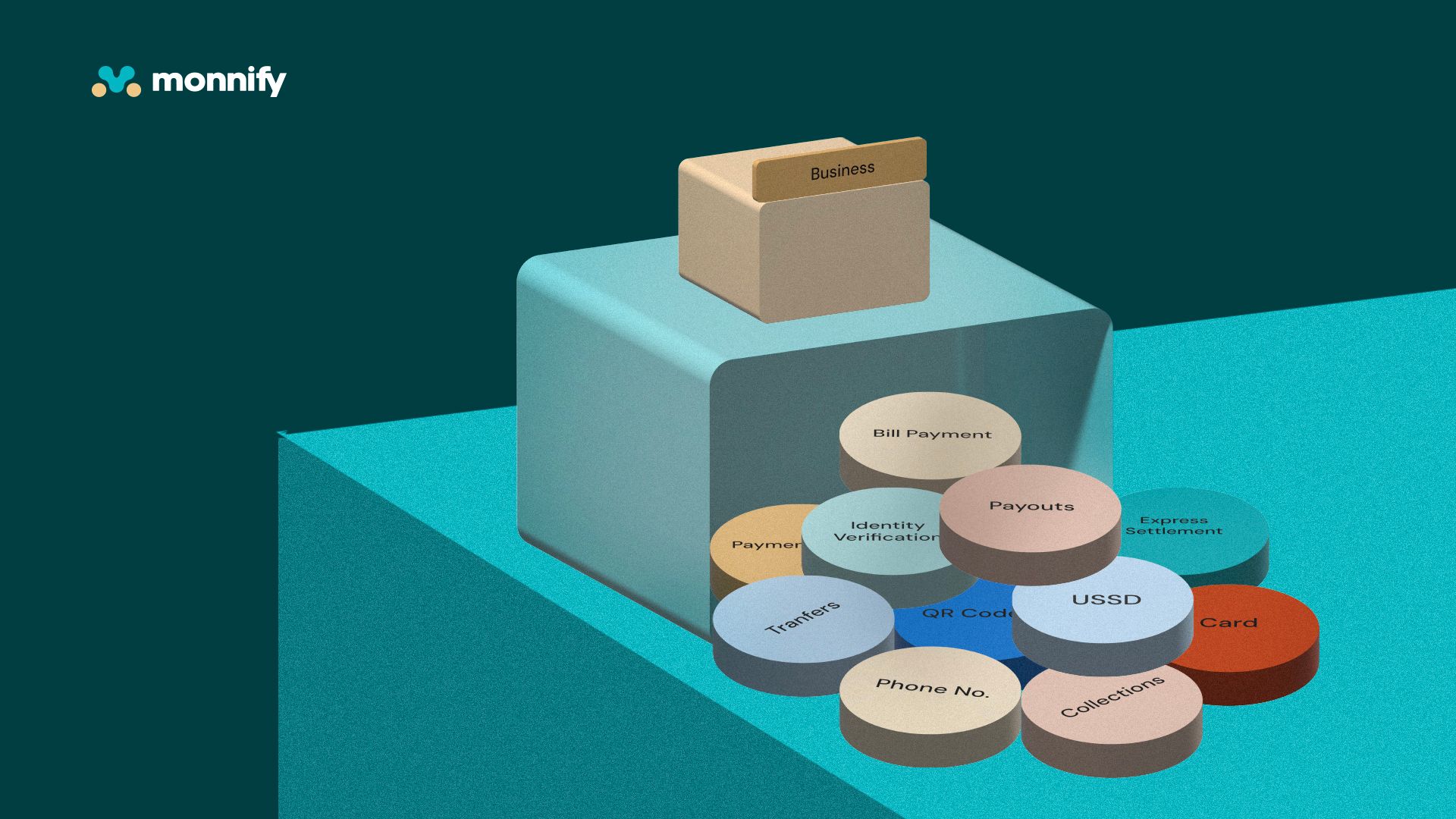
Monnify supports bank transfers, virtual accounts, USSD, and card payments through a single integration, No need to manage multiple providers.
Explore Monnify's payment channels at monnify.com/developers
FAQ
Which type of payment gateway is most common in Nigeria?
API-based gateways combined with virtual account collections are most common among product-driven businesses. Hosted payment links are popular for small businesses and creators.
Can I use multiple gateway types at the same time?
Yes. Most modern payment platforms support several checkout modes through the same integration. A well-built gateway lets you offer card, transfer, and USSD from the same checkout flow.
What is the easiest payment gateway to integrate in Nigeria?
Payment links require zero technical integration and can be set up in minutes. For full API integrations, Monnify's developer documentation walks through the process step by step with sandbox support.
Related: What is a Payment Gateway and How to Choose One | What Does a Payment Gateway Do